
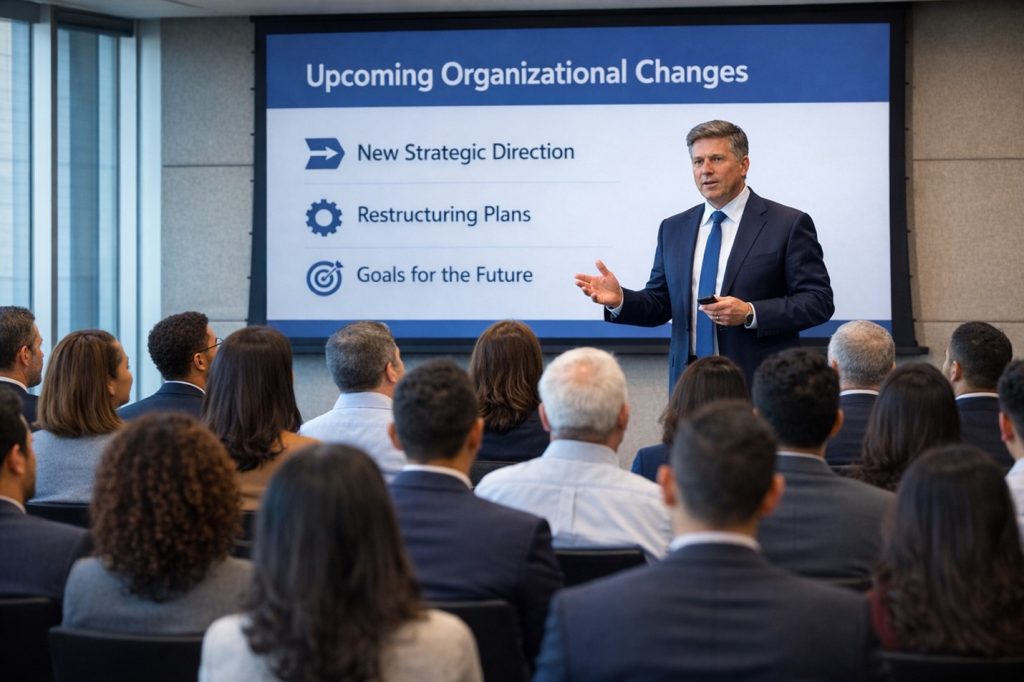
We’ve all experienced organizational changes- some small, some not so much. Each change comes with a period of normalizing and adjusting until the change sticks. That normalization or implementation phase is generally tough and often sloppy and clumsy. Humans don’t generally enjoy change. People know the “old way” and are reluctant to accept the “new way”. People start wearing the “If it ain’t broke, don’t fix it” t-shirts. Well, being “broken” is not always the reason for change- sometimes it’s just needed:
“Whosoever desires constant success must change his conduct with the times.”- Niccolo Machiavelli
“Neither a wise man nor a brave man lies down on the tracks of history to wait for the train of the future to run over him.”- Dwight D. Eisenhower
“The most successful businessman is the man who holds onto the old just as long as it is good and grabs the new just as soon as it is better.”- Robert P. Vanderpoel
“If the rate of change on the outside exceeds the rate of change on the inside, the end is near.”- Jack Welsh (GE)
“If you have always done it that way, it is probably wrong.” – Charles Kettering
“We know what we are but know not what we may be.” – William Shakespeare
That said, organizational change management is a skill that shouldn’t be trusted in the hands of just any ‘ol staff officer- you need to engage professional change folks. You need to over communicate to constituents- there must be a steady drumbeat of what’s about to happen and why. Also, change should be broken down in to “bite size”, digestible chunks whenever possible. Some try to shove far too much change down an organization at once. Some organizations like to slowly pull off the “band aide” (change) while others like to just rip it off. You have to carefully assess organizational pain thresholds and weigh the benefits and impacts of slow vs. fast “band aide” removal.
At an individual level, there’s an aspect of personally internalizing the why of change. Organizationally, if we’re going to succeed and adapt through change, we need to TRUST. We must trust our leaders as they are driving us to that next thing- not letting the “future run over us” (Eisenhower) but rather driving us to “what we may be” (Shakespeare).
As I look back through org changes I’ve experienced, I’ve seen TRUST play out. With each change there were stresses in implementation, launching and learning, imperfections in processes, etc. Once we worked through the bumps, what awaited us on the other side was usually prosperity. That pattern was cyclical- change announced-implementation began- we normalized and tweaked stuff ‘til it was right- then we prospered. We’re all responsible for prospering. We need to allow the change, assist the change, and work through the change to get to the goodness. Having lived through this cycle over and over again, I personally evaluate each change individually on its own merit. If there are six major changes, I evaluate each of the six separately, not as a pack of 6. If each change is getting us to somewhere we need to be as an organization, I’m good with it. Once I’m personally onboard, I mentally prepare for sloppy implementation and know that good times will follow.
Changes are hard but as an organization and individuals, they HAVE TO HAPPEN:
“In times of change, learners inherit the Earth, while the learned find themselves beautifully equipped to deal with a world that no longer exists.” – Eric Hoffer
“Change is the law of life. And those who look only to the past or present are certain to miss the future.” – John F. Kennedy
Lastly, a personal favorite:
“If you don’t like change, you’re going to like irrelevance even less.” – General Eric Shinseki (Former Chief of Staff, U. S. Army)
So, is change challenging? Yes. Is implementation of change often cumbersome? Yes. Is change needed? YES. Do we need to change a lot and often? If you TRUST your leadership- yeah, maybe so.
That said, please know that I’m not some “Pollyanna”. As a leader, if you just can’t embrace the new directional heading of the organization, perhaps you need to take a hard look at your ability/willingness to contribute to the next chapter. Do you buy in to the new direction and believe you can comfortably lead in the new paradigm? If the answer is ultimately, “No”, respectfully step aside and allow others to shine. Make room for someone else to pick up the mantle and lead in your stead.
I’ve been there done that. It’s a tough personal decision but ultimately the best thing for both you and your organization.
–Nate Copeland